15.30174, -61.38808
Dominica Sperm Whales
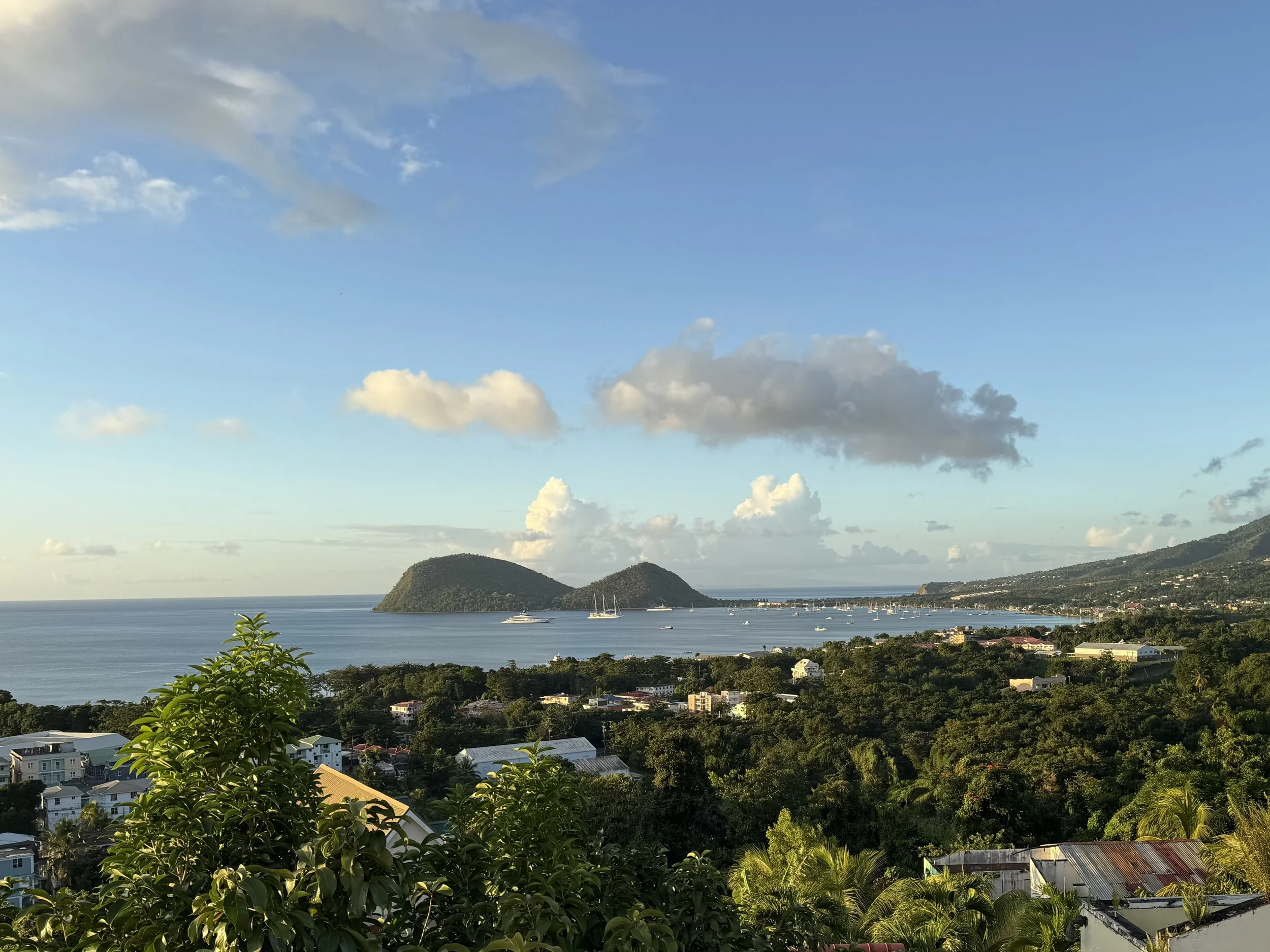
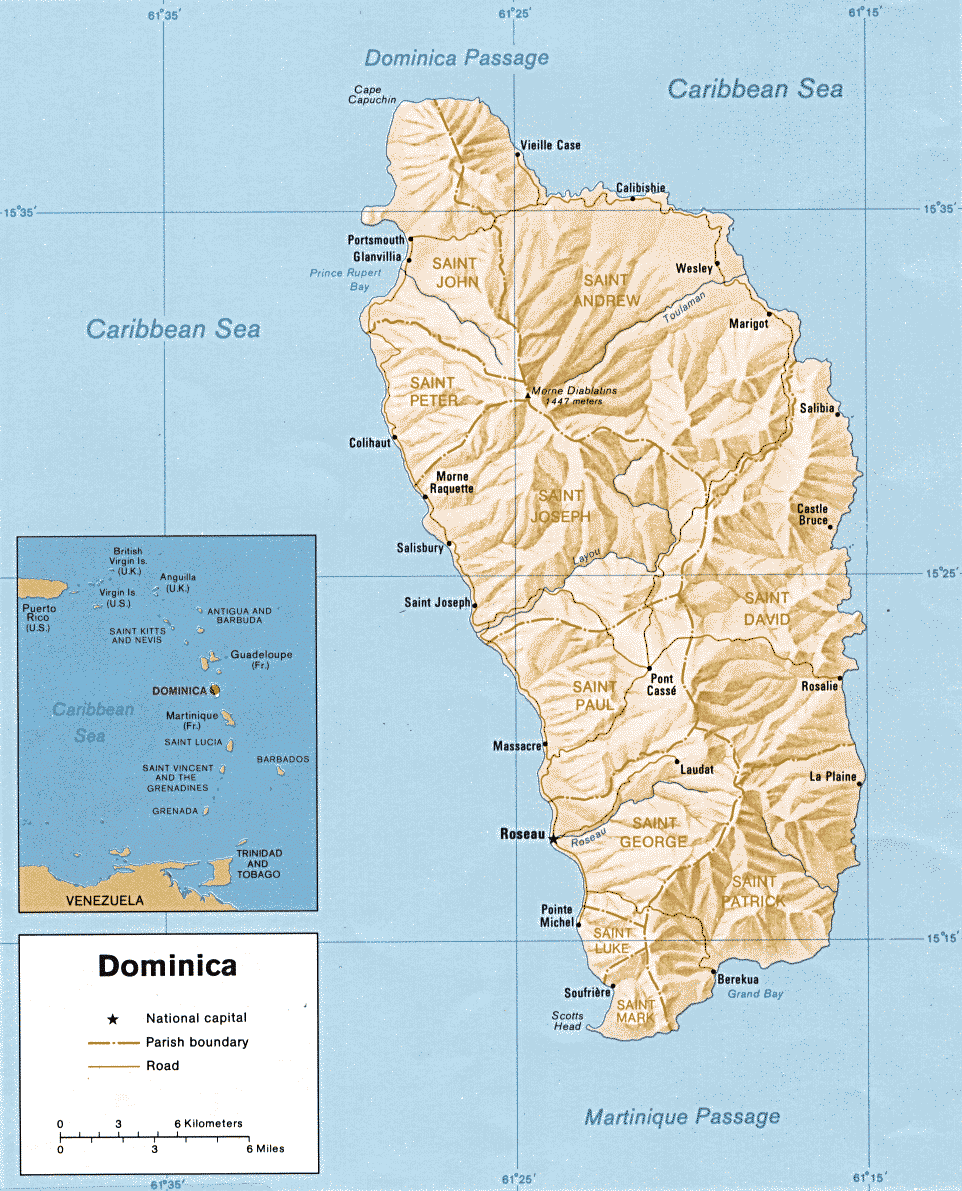
Rising steeply from the deep blue of the eastern Caribbean, Dominica is a place where rainforest-covered mountains meet an ocean that drops away almost immediately into the abyss. Known as the “Nature Island,” Dominica remains one of the least developed islands in the region, shaped by its volcanic origins, dramatic coastlines, and pristine marine environment. Beneath the surface, this rugged landscape continues underwater, creating one of the most extraordinary habitats in the Caribbean—and a sanctuary for one of the ocean’s most remarkable animals: the sperm whale.
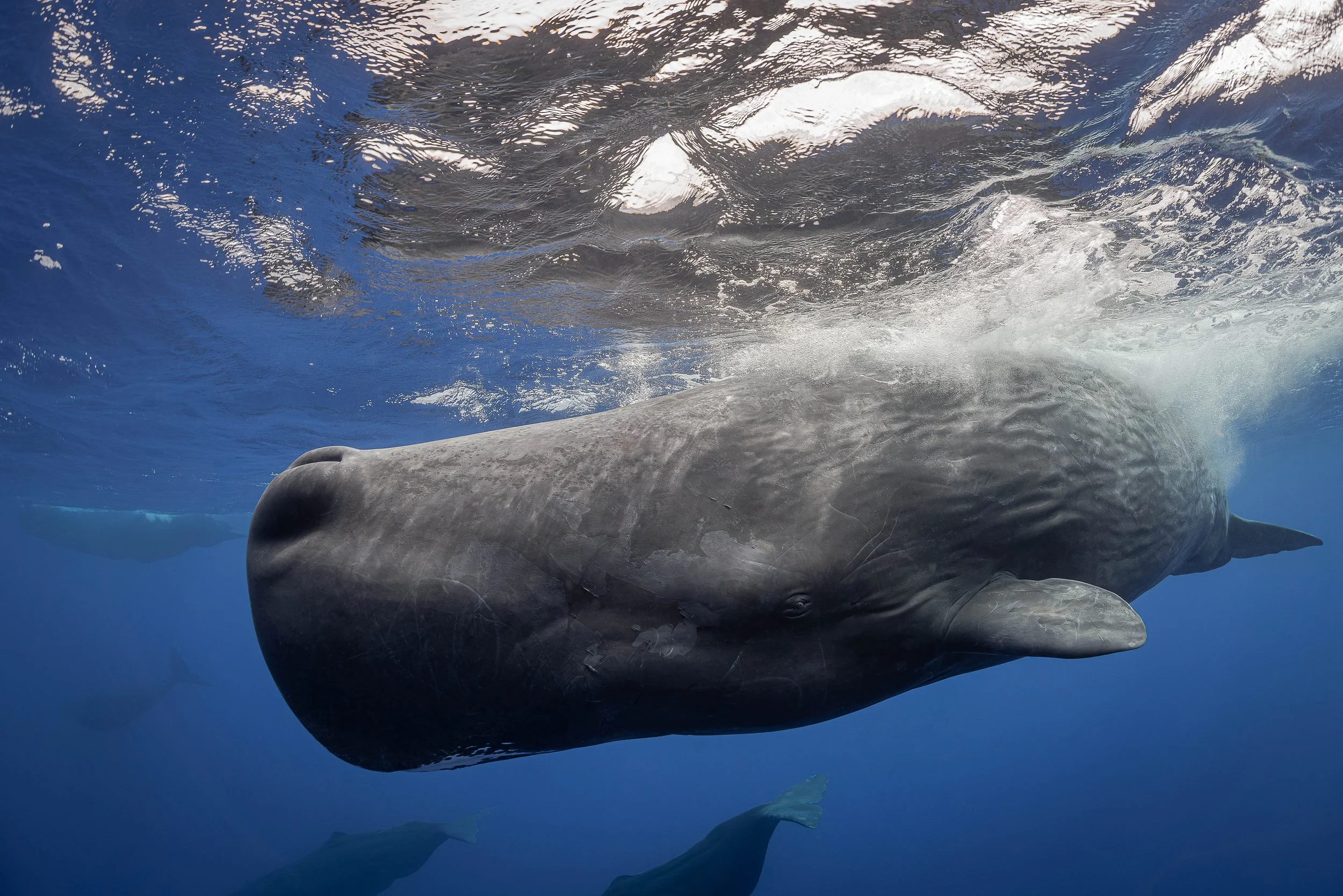
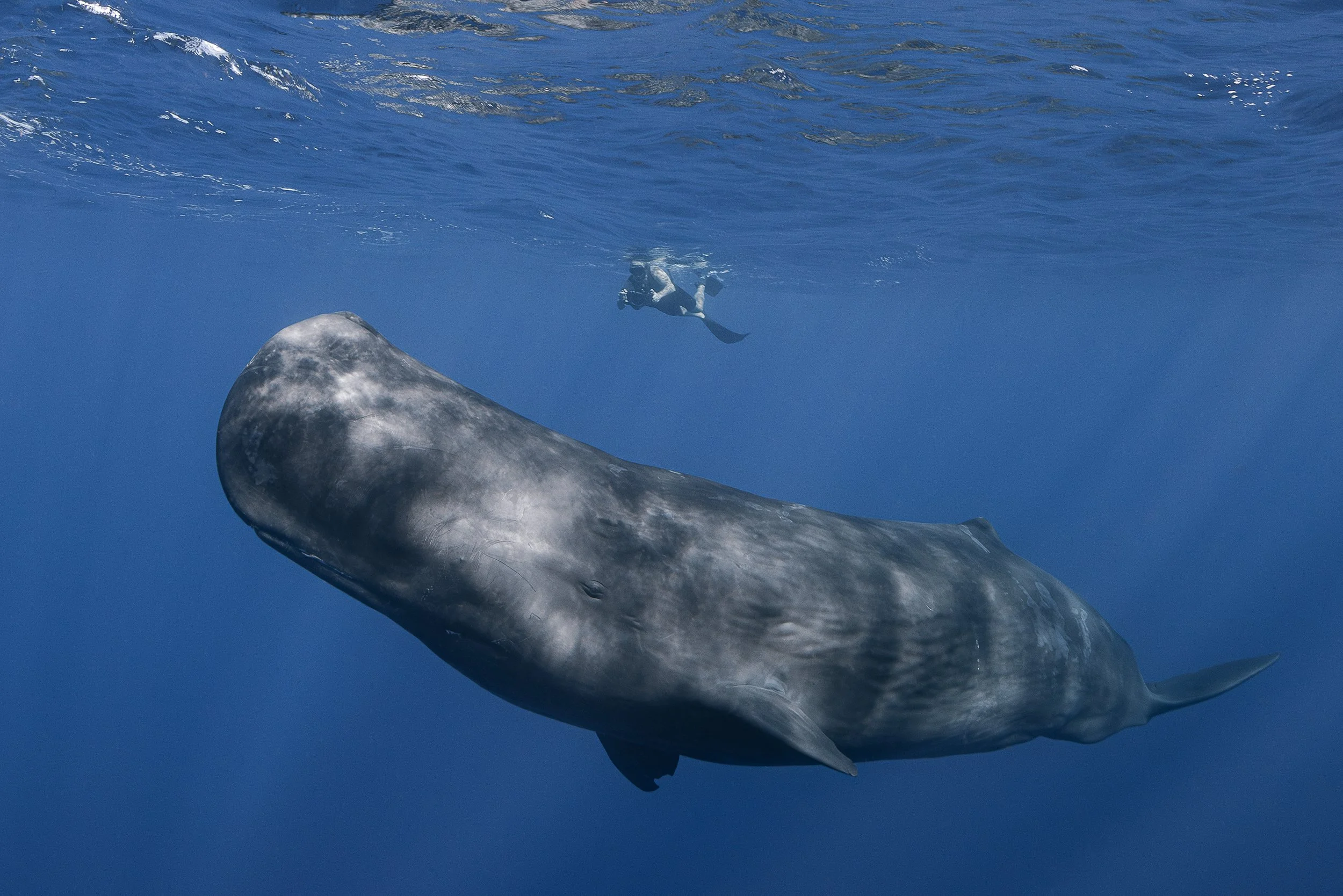
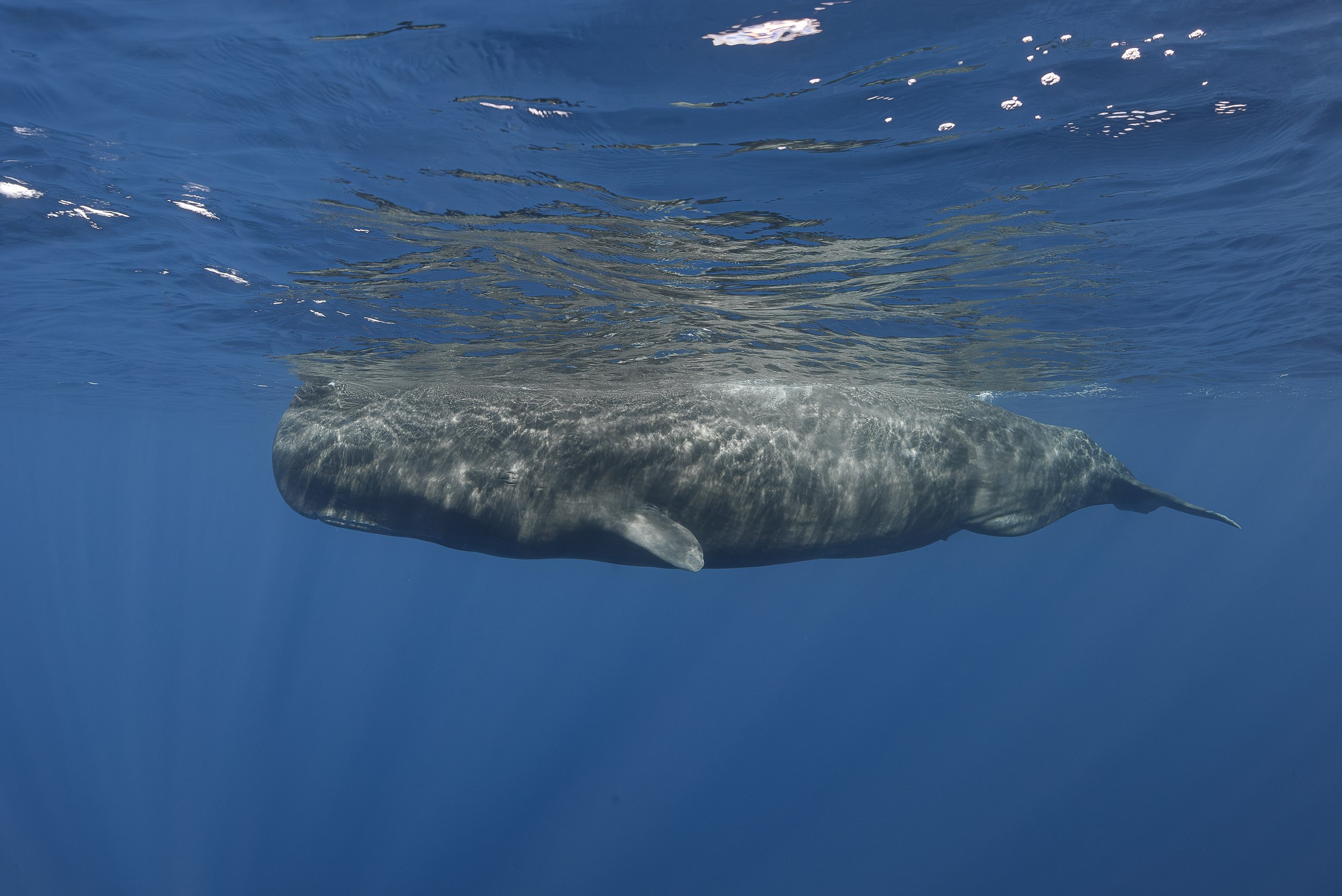
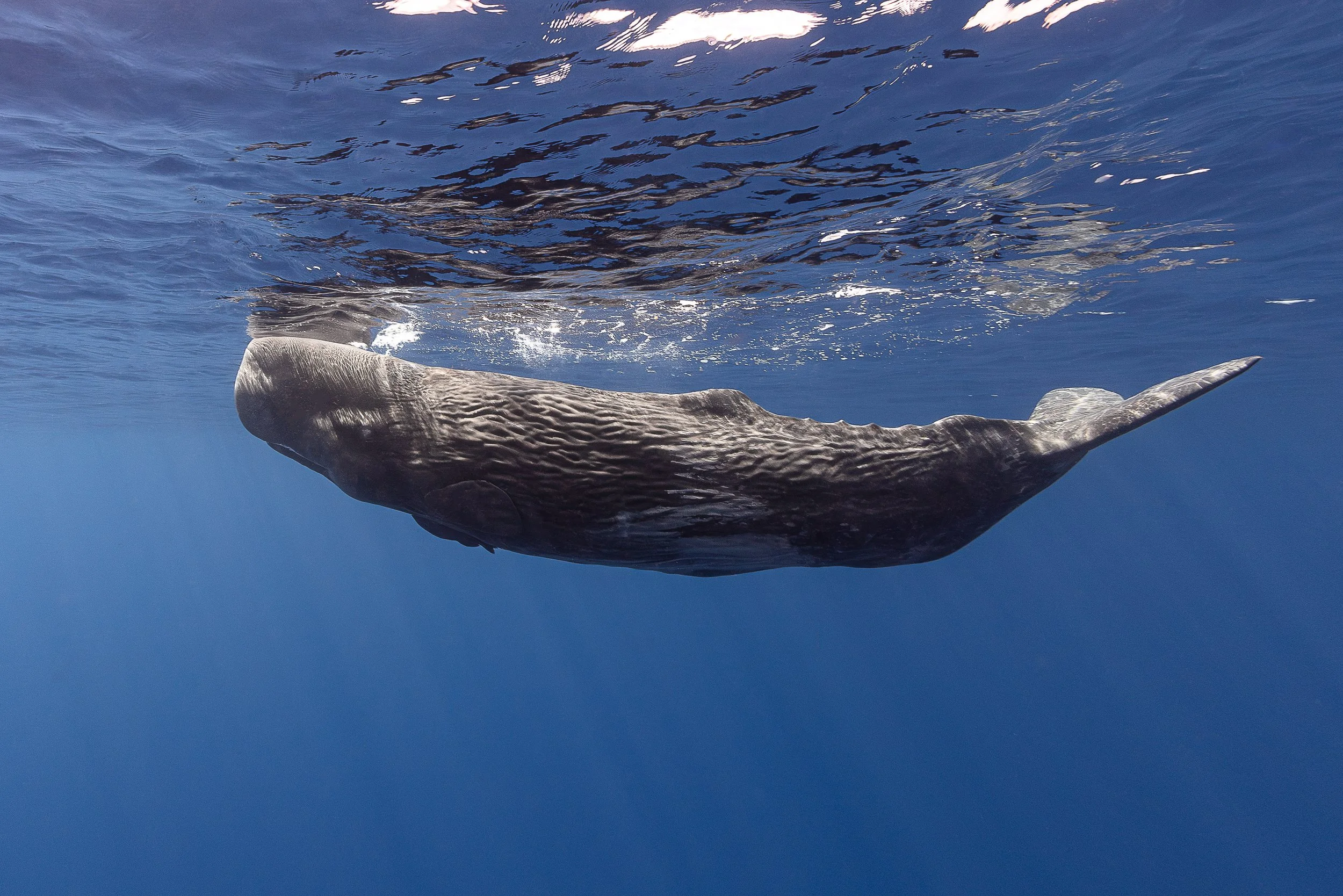
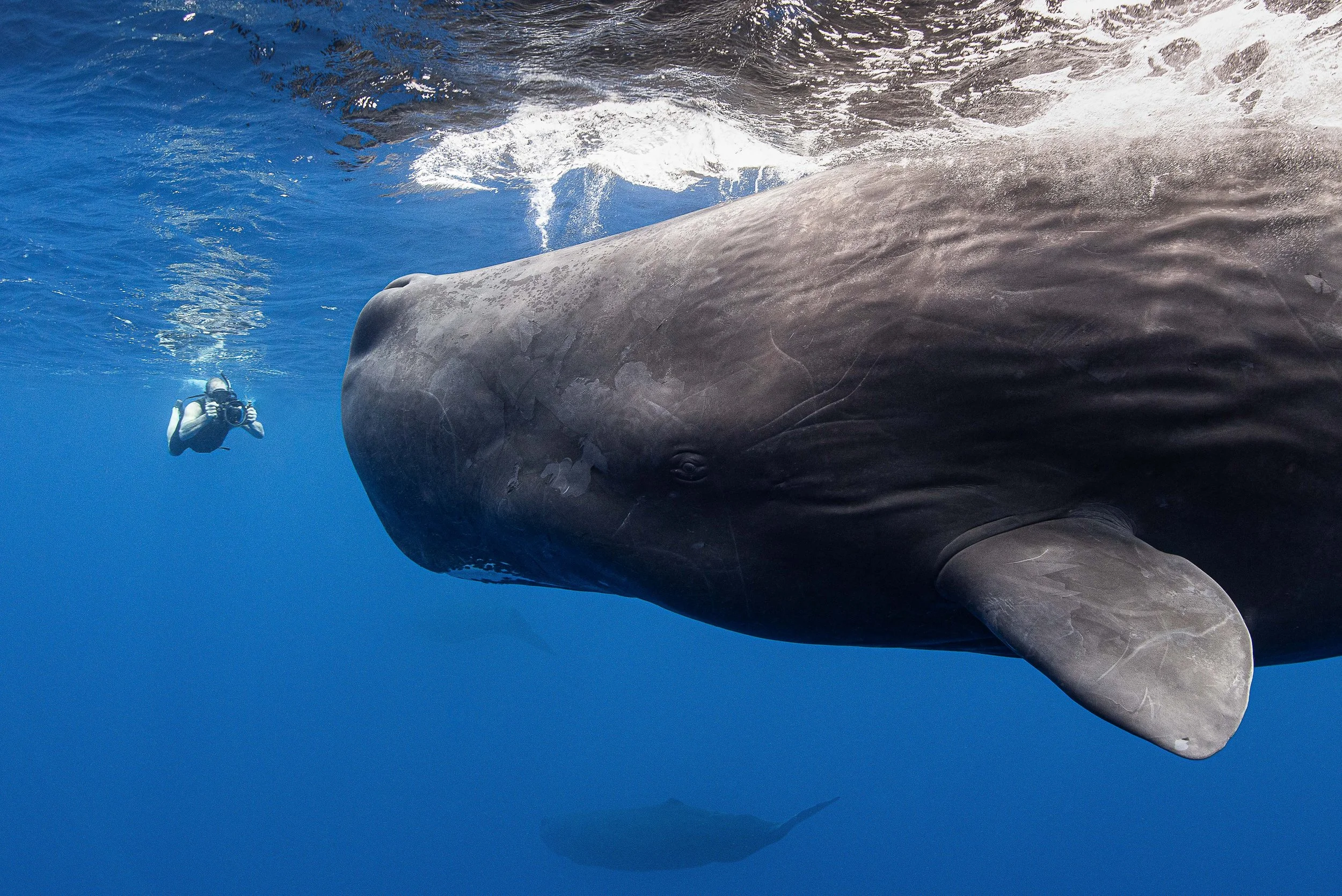
Sperm whales are the largest toothed predators on Earth and true masters of the deep. Adult males can reach up to 18–20 meters in length and weigh more than 50 tons, while females are smaller and form the social core of long-lasting family groups. Their unmistakable square-shaped heads, which make up nearly a third of their body length, house the spermaceti organ—an extraordinary biological structure essential for echolocation and sound production. These whales emit powerful clicking sounds, the loudest known in the animal kingdom, allowing them to navigate and hunt in complete darkness at depths exceeding 1,000 meters.
Dominica is one of the few places in the world where sperm whales can be observed year-round, and the reason lies in the island’s unique underwater topography. Just a short distance from shore, the seafloor plunges dramatically into deep oceanic canyons and basins. Depths of 1,000 to 2,000 meters are reached within only a few kilometers of land, with surrounding waters descending to several thousand meters. This immediate access to the deep sea brings an abundance of squid—the sperm whale’s primary prey—close to the island, eliminating the need for long migrations and allowing whales to remain in the area throughout the year.
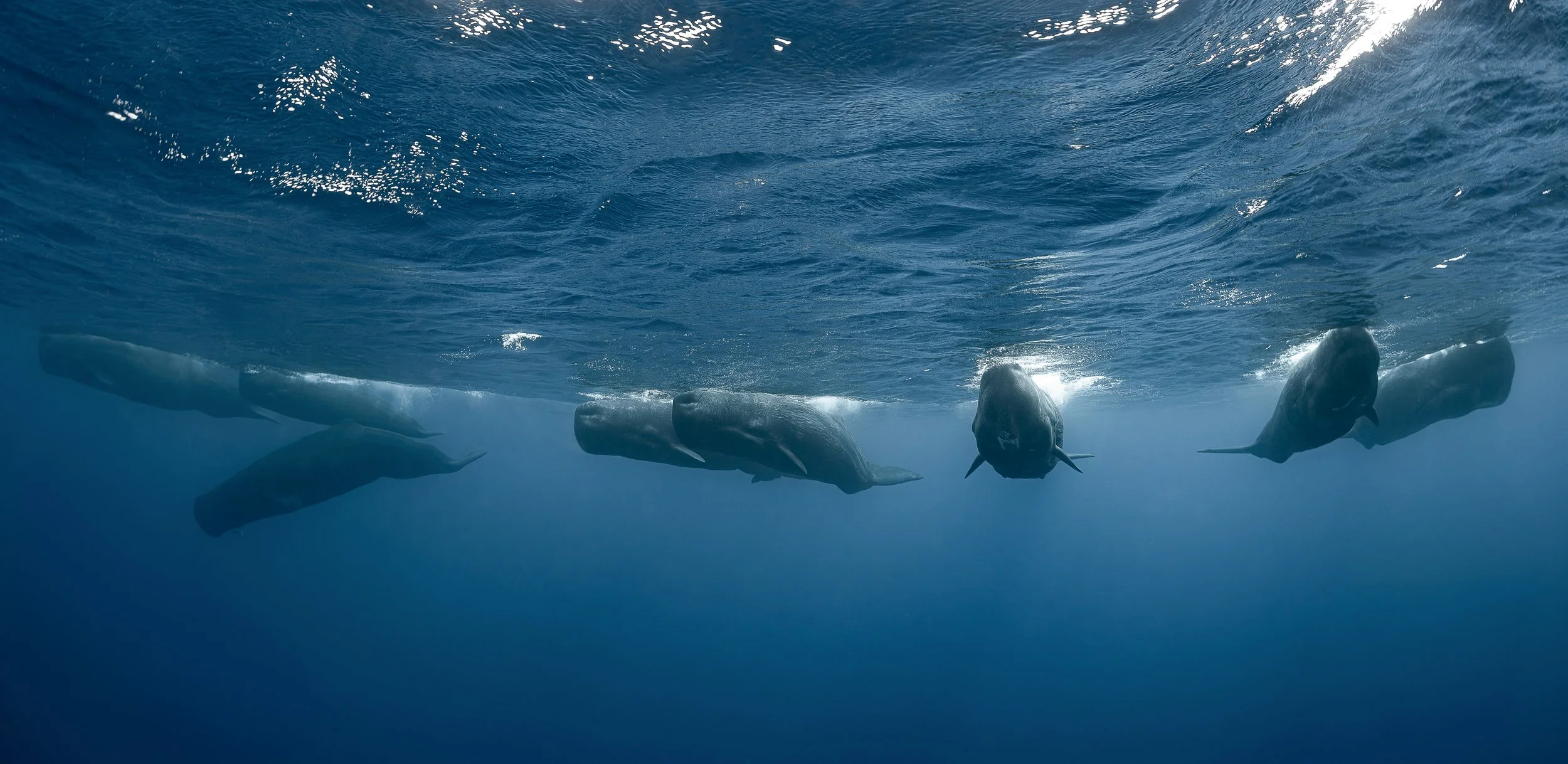
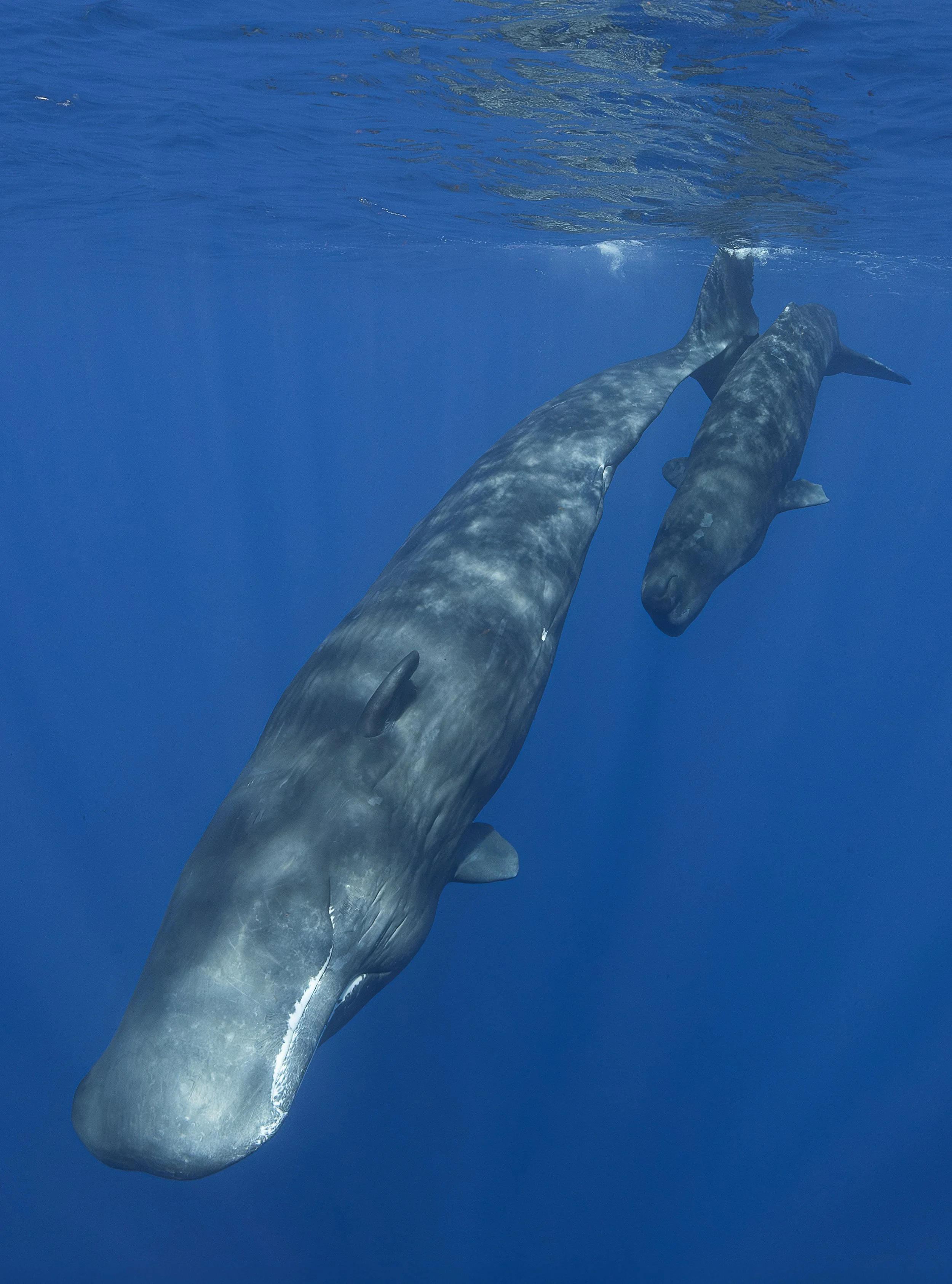
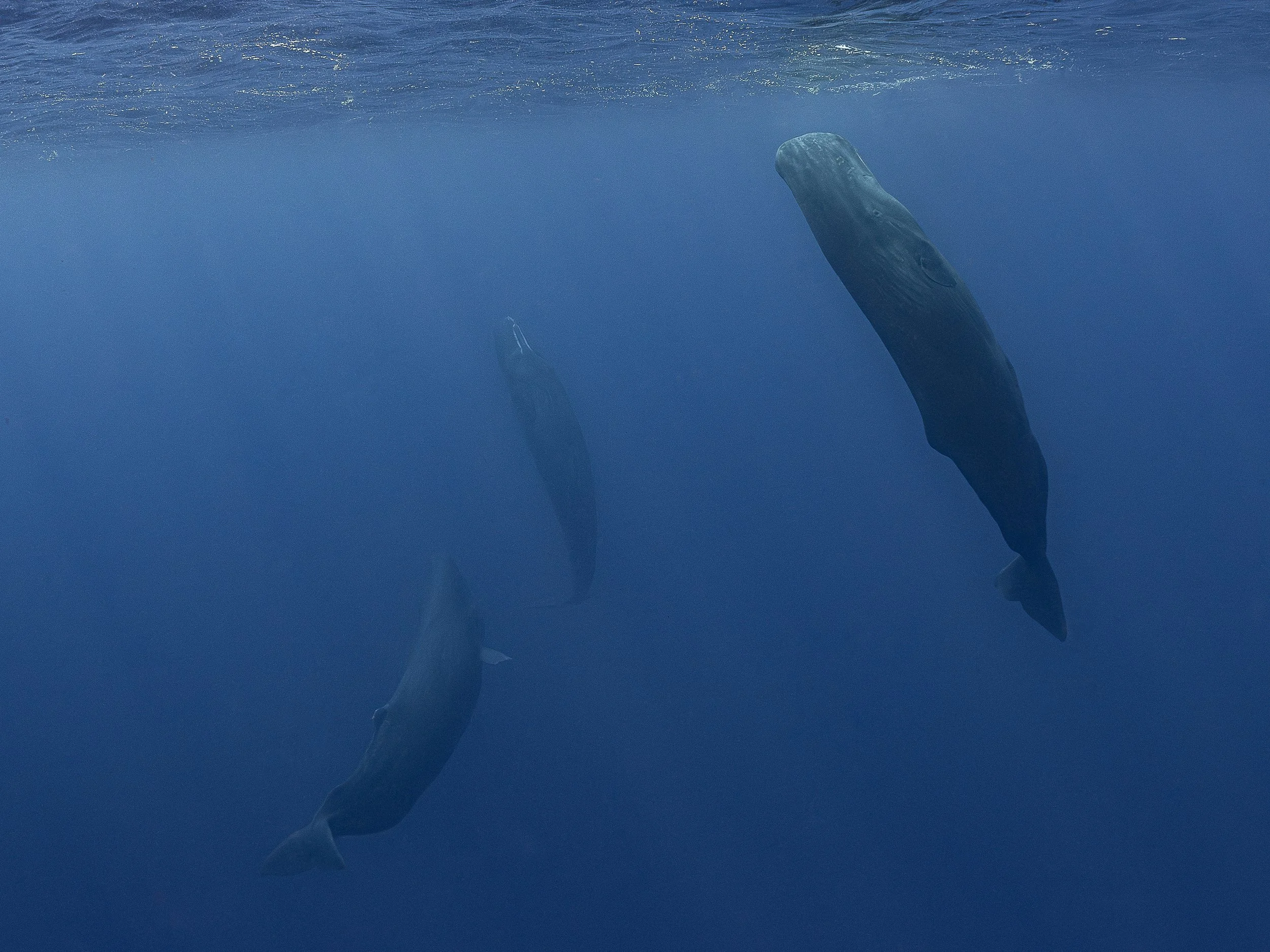
Sperm whales are highly intelligent and deeply social animals. Females and calves live in stable matrilineal units, forming lifelong bonds and cooperating in caring for young, resting, and protection. Calves are born after a 15–16 month gestation and may nurse for several years, learning vital survival skills through prolonged close contact with their family. Adult males leave these groups as adolescents and roam the world’s oceans, occasionally returning to tropical waters like those off Dominica.